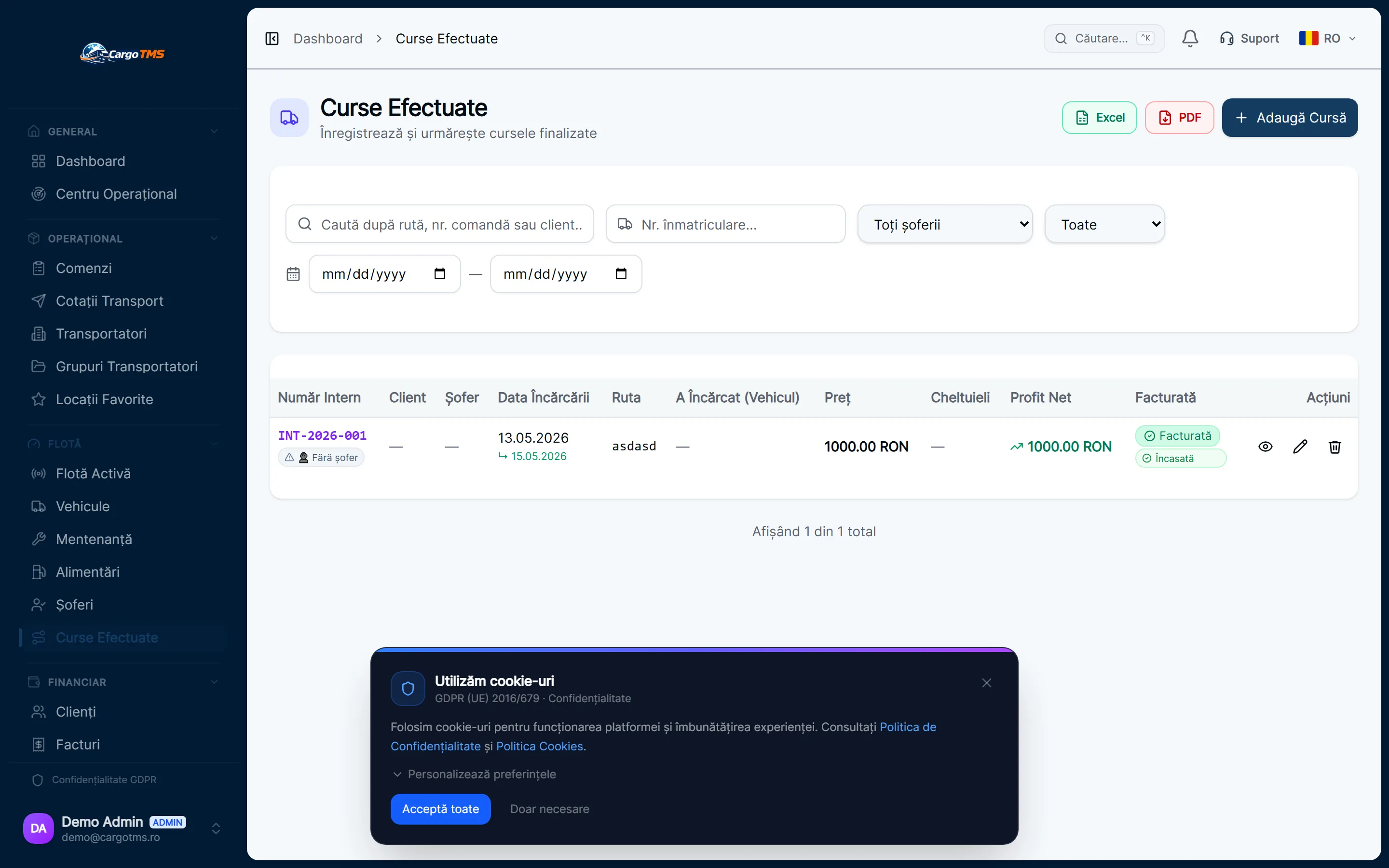
Most transport companies track fuel the same way they did ten years ago: paper receipts handed in at the end of the week, manual entry into a spreadsheet, and a reconciliation attempt at month-end that's always too late to act on. By the time a pattern of waste is visible, thousands have already been lost. Automated fuel tracking in CargoTMS changes the economics of fleet management — moving from reactive accounting to proactive cost control.
Why Manual Fuel Tracking Fails At Scale
With two trucks, manual tracking is annoying but manageable. With ten or more vehicles, it becomes a blind spot. Drivers refuelling off-route, cards used at unexpected times, consumption figures that don't match distances — these anomalies get buried in spreadsheet rows and only surface when reviewing the previous month's costs. By then, the behaviour has been repeated dozens of times. Manual tracking creates a lag between the event and the awareness of it — and in fleet management, that lag is where the losses accumulate.
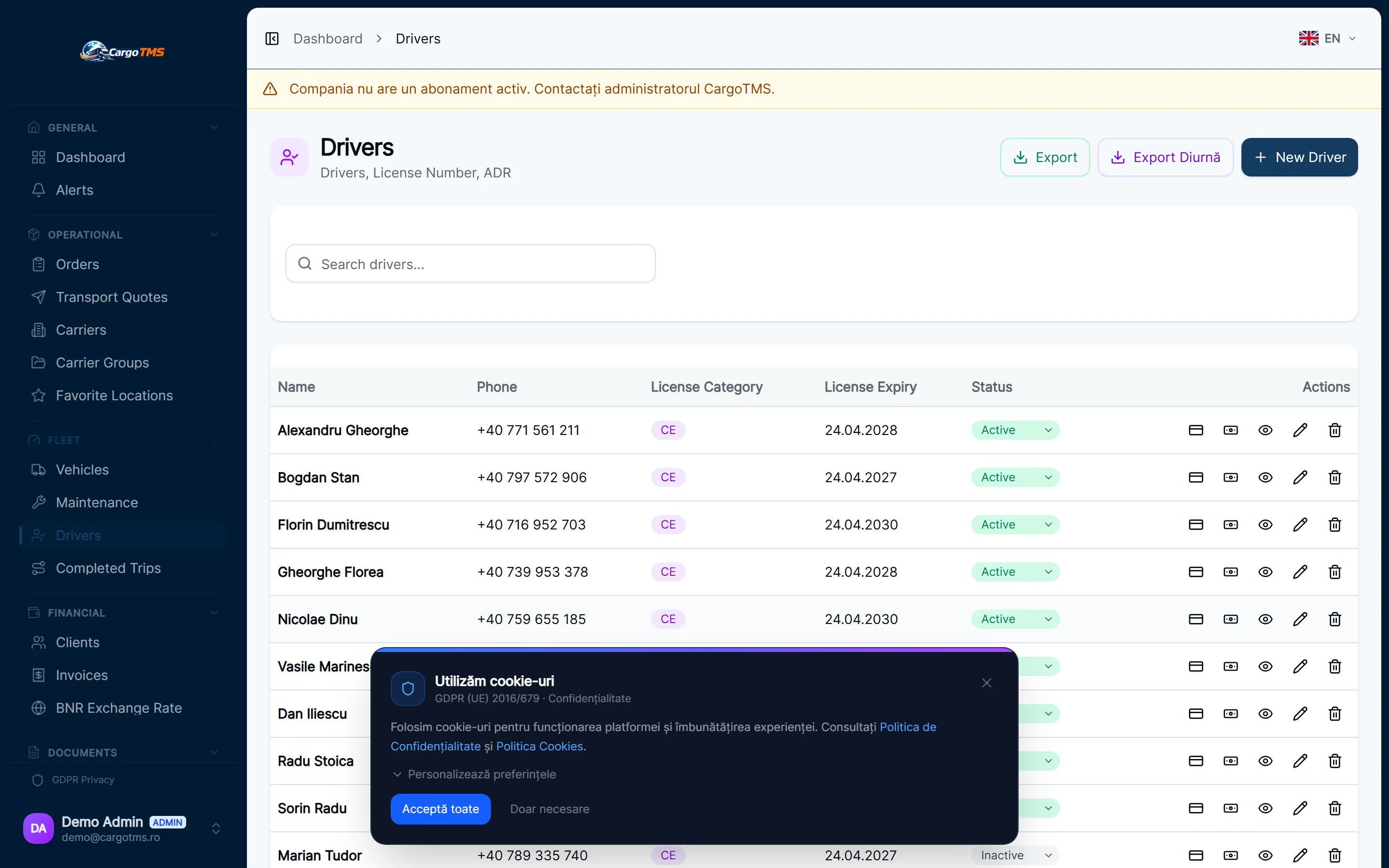
How Automated Fuel Tracking Works in CargoTMS
CargoTMS links every fueling event directly to the responsible vehicle and driver. Every fueling is recorded with quantity, location, cost, card and odometer. The system automatically calculates L/100 km consumption against the previous fueling, enabling direct comparisons between vehicles and drivers. Data flows in as part of normal operations, directly from the driver portal.
Anomaly Detection: Finding Waste Before It Compounds
CargoTMS automatically flags fuelings with unusually high consumption, unrealistic quantities and use of a deactivated card. The flags appear directly in the fueling log without any manual comparison — which means problems are noticed in days, not months.
Fuel Cards: Control Without Complexity
CargoTMS supports multiple fuel cards per driver. Cards are assigned to the driver, and the card used is stored on every fueling. This removes the common problem of fuel spend getting "lost" between drivers when cards are shared. Fleet managers can review fuel card activity per driver or per vehicle, spot unusual patterns and see consolidated fuel spend without manual collection.
Cost-Per-Trip and Route Profitability
One of the most powerful aspects of fuel tracking is the ability to calculate the real cost per trip. When fuel expenses are added to the trip in CargoTMS, it becomes possible to compare the real profitability of similar trips over time. A route that looked profitable at invoicing can look very different once real fuel consumption is included. This data drives better pricing decisions and helps identify the routes where fuel efficiency improvements have the most value.
💡 Key Takeaways
- Register every fuel card in CargoTMS and link it to the correct driver — even temporary assignments.
- Ask drivers to enter the odometer on every fueling so L/100 km consumption is accurate.
- Review flagged fuelings weekly — waiting for monthly reconciliation misses the window for cost control.
- Use cost-per-trip data when reviewing pricing for regular routes.
- Compare fuel efficiency between similar vehicles to identify maintenance needs early.
Reducing fleet fuel costs is not about driving less — it is about visibility. When every liter is tracked against the right driver, card and vehicle, waste becomes visible and actionable. CargoTMS makes this tracking part of normal dispatch operations, so the insights are available without extra administrative work.
Frequently Asked Questions
How does CargoTMS detect fuel anomalies?
The system calculates L/100 km consumption from the odometer against the previous fueling. Unusually high consumption, unrealistic quantities and use of a deactivated card are flagged automatically for review.
Can I track multiple fuel cards per driver or vehicle?
Yes. Each driver can have multiple fuel cards registered in the system. Every fueling keeps the card, driver and vehicle, and the filterable log shows fuel spend per driver and per vehicle.
Does fuel tracking require any additional hardware?
No. CargoTMS fuel tracking is pure software and works with data entered by the driver from the portal or by the office. No telematics hardware is required.
How often should I review fuel data?
For proactive cost control, weekly reviews of flagged fuelings are recommended. Monthly totals per vehicle provide the strategic view for pricing decisions and route planning.
Want to see this in CargoTMS?
Request a free personalised demo. We'll walk you through the exact workflow described in this article.
🚀 Request Free Demo